
Keywords:
Veterinary drug quality control, veterinary pharmacovigilance, environmental risk assessment veterinary medicines, veterinary pharmaceutical regulation, One Health veterinary medicine, veterinary drug safety
Introduction
Veterinary medicinal products are essential tools for maintaining animal health, improving livestock productivity, and supporting global food security. However, the growing use of veterinary pharmaceuticals in livestock production has raised increasing concerns about their environmental impact and ecological sustainability.
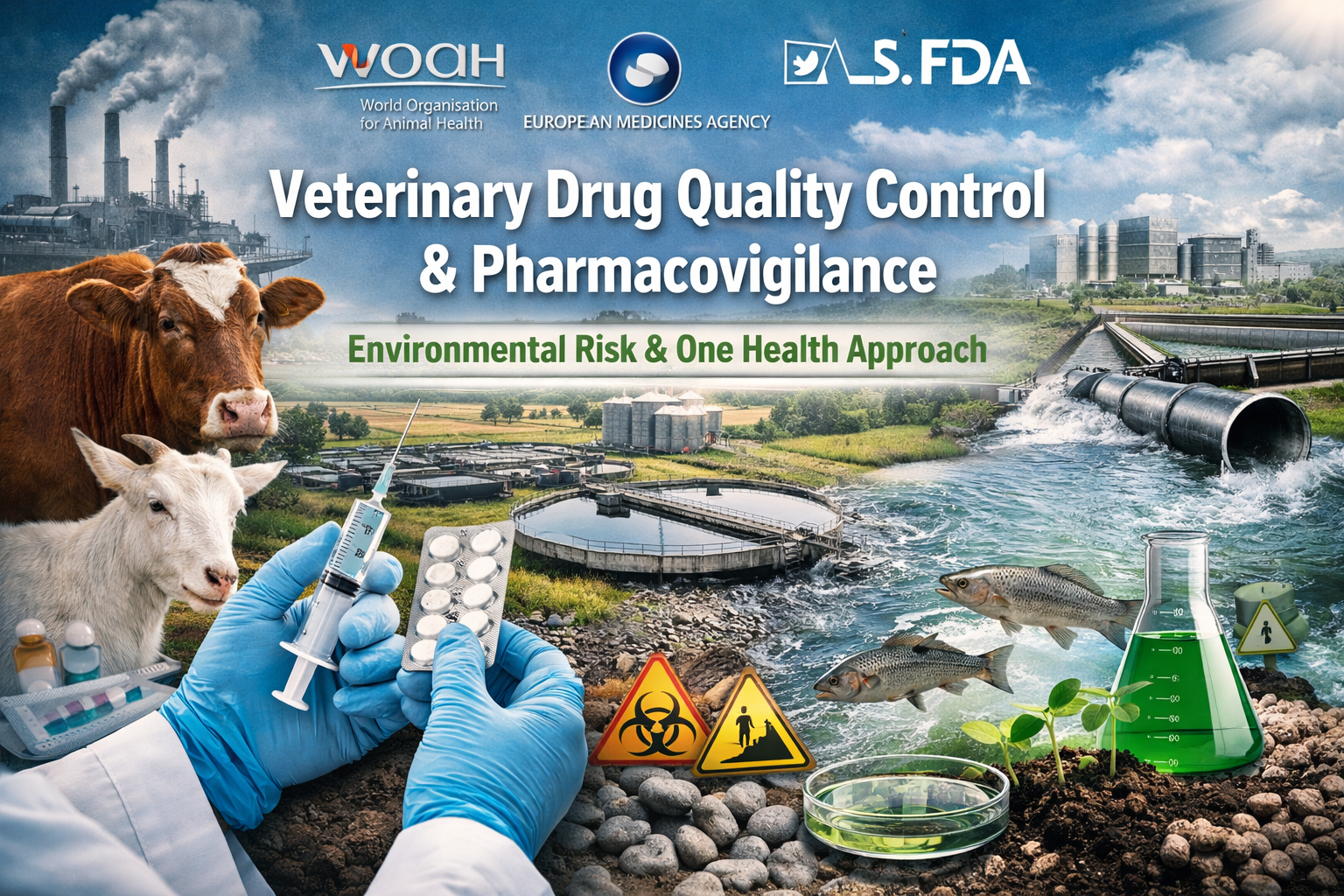
International regulatory authorities such as the World Organisation for Animal Health (WOAH), the European Medicines Agency (EMA), and the U.S. Food and Drug Administration (FDA) emphasize that veterinary medicines must be evaluated not only for quality, safety, and efficacy, but also for their environmental impact throughout the product life cycle.
For companies involved in veterinary pharmaceutical trade, inspection, and regulatory compliance, implementing robust quality control and pharmacovigilance systems is essential for sustainable livestock production and responsible drug use.
Masoudnia Business supports veterinary regulatory compliance and quality assurance strategies aligned with international regulatory frameworks.
Veterinary Drug Quality Control
Quality control of veterinary medicinal products ensures that pharmaceuticals used in animal health meet international standards of purity, potency, safety, and consistency.
According to international regulatory frameworks, quality assurance for veterinary pharmaceuticals includes multiple stages.
Raw Material and Active Ingredient Testing
The quality of veterinary drugs depends largely on the integrity of Active Pharmaceutical Ingredients (APIs) and excipients. These materials are tested according to international pharmacopeial standards such as:
United States Pharmacopeia (USP)
European Pharmacopoeia (Ph. Eur.)
British Pharmacopoeia (BP)
Analytical testing typically includes:
API purity testing
impurity profiling
microbiological contamination tests
stability and degradation analysis
High-quality raw materials reduce the risk of ineffective treatments and environmental contamination.
Good Manufacturing Practice (GMP)
Veterinary pharmaceutical manufacturers must comply with Good Manufacturing Practice (GMP) standards to ensure consistent product quality.
GMP systems include:
validated production processes
environmental monitoring of manufacturing facilities
batch traceability and documentation
equipment qualification and calibration
strict quality management systems
These practices ensure that veterinary medicines meet regulatory expectations established by WOAH, EMA, and FDA.
Finished Product Quality Testing
Before veterinary drugs are released to the market, comprehensive testing is conducted to confirm product safety and effectiveness.
Key quality tests include:
potency and dosage uniformity
dissolution testing
sterility testing
microbial contamination analysis
stability evaluation during shelf life
Proper quality control ensures veterinary medicines remain safe for animals, humans, and the environment.
Veterinary Pharmacovigilance
Veterinary pharmacovigilance refers to the continuous monitoring of veterinary medicines after they are placed on the market.
The objective of pharmacovigilance systems is to detect and manage potential risks associated with veterinary medicinal products.
Key pharmacovigilance activities include:
monitoring adverse drug reactions (ADR) in animals
detecting lack of therapeutic efficacy
identifying medication errors
evaluating withdrawal periods for food-producing animals
monitoring environmental safety risks
International regulatory frameworks encourage veterinary professionals and pharmaceutical companies to report adverse events to national and international safety databases.
Environmental Risk of Veterinary Medicines
Veterinary drugs may enter the environment through several pathways, including:
excretion of active substances in animal manure
agricultural runoff from livestock farms
aquaculture discharge
disposal of unused pharmaceuticals
pharmaceutical manufacturing waste
Once released into the environment, pharmaceutical compounds can affect soil microorganisms, aquatic organisms, and ecological balance.
Environmental monitoring of veterinary pharmaceuticals is therefore becoming a central component of veterinary regulatory policy.
Environmental Risk Assessment (ERA)
Environmental Risk Assessment (ERA) is a regulatory requirement for veterinary medicinal products in many jurisdictions, particularly under European Medicines Agency (EMA) guidelines.
The ERA framework follows a tiered evaluation process.
Phase I – Exposure Assessment
This phase evaluates the predicted environmental exposure of a veterinary medicine based on:
target animal species
administration route
dosage and frequency of use
manure management practices
Environmental exposure is estimated using Predicted Environmental Concentration (PEC) models.
Phase II – Ecotoxicological Evaluation
If environmental exposure exceeds defined thresholds, a detailed ecotoxicological assessment is required.
This assessment evaluates:
toxicity to aquatic organisms
soil organism sensitivity
environmental persistence
bioaccumulation potential
Risk characterization is typically calculated using:
Risk Quotient (RQ) = PEC / PNEC
Where:
PEC = Predicted Environmental Concentration
PNEC = Predicted No Effect Concentration
If environmental risks are identified, risk mitigation measures must be implemented.
Environmental Pharmacovigilance
Environmental pharmacovigilance extends traditional drug safety monitoring to include long-term environmental impacts of veterinary medicines.
This includes monitoring:
antibiotic residues in soil and water
ecological effects on aquatic ecosystems
environmental drivers of antimicrobial resistance (AMR)
Environmental surveillance programs help identify emerging risks and guide regulatory decision-making.
One Health and Sustainable Veterinary Medicine
The One Health approach recognizes that the health of animals, humans, and ecosystems are interconnected.
Veterinary drug regulation must therefore address:
animal health protection
human food safety
environmental sustainability
Responsible veterinary pharmaceutical management contributes to global efforts to control antimicrobial resistance, protect ecosystems, and ensure sustainable livestock production.
Masoudnia Business: Supporting Veterinary Regulatory Compliance
Masoudnia Business provides expertise in veterinary regulatory compliance, inspection, and quality assurance across international markets.
Our activities include:
veterinary product inspection and certification
regulatory advisory for veterinary pharmaceuticals
quality management system development
veterinary supply chain compliance
environmental risk and food safety consulting
By aligning with international regulatory frameworks such as WOAH, EMA, FDA, and VICH, Masoudnia Business contributes to improving veterinary pharmaceutical governance and responsible drug use.
Conclusion
Quality control and pharmacovigilance systems are essential for ensuring the safety and effectiveness of veterinary medicinal products. Integrating environmental risk assessment and environmental pharmacovigilance into these systems strengthens regulatory oversight and supports sustainable livestock production.
Companies that adopt international regulatory standards can ensure responsible veterinary pharmaceutical use while protecting animal health, human health, and environmental sustainability.